



Building Networks of Hope: Transforming End-of-Life Care for the Incarcerated

April 6, 2026
This article first appeared in the 2025 Commonweal Year-End Magazine.
View this article and more by [ clicking here ] to explore the full magazine.
_________
One of the most significant gifts a person can give is to be present for someone else’s dying. Not everyone dies surrounded by a loving community. Not everyone dies without pain. It’s a difficult and unknown threshold, and this reality is especially stark for incarcerated people facing a terminal diagnosis. In an overwhelmed and apathetic prison system, the Humane Prison Hospice Project (Humane) is seeking to change the way incarcerated people meet death by training peer caregivers. They have almost 10 years of experience changing the way people die in the California prison system—and this year Humane is marking a milestone: bringing their model from California to other states with pilot programs in Michigan, Washington state, and Oregon.

In Michigan, Humane has spent the year performing a thorough assessment of the state’s needs. They’re navigating the Michigan political and prison cultures. They’re learning what is and is not allowed, and how receptive patients are to peer caregivers. They’re listening deeply to find out how their program can best be of service.
"So far it’s going really great," says Humane’s Executive Director Lisa Deal. "We’ve had a warm reception from leaders in the Department of Corrections in Michigan."
Over the course of the next year, Humane is looking forward to working with in-state community partners, including a community-based hospice and individuals with expertise, to tailor the training curriculum to match local needs. Ideally, Humane hopes their community partners in Michigan will carry on the program after the pilot phase is complete. Versions of this pilot program will also be launching in Washington state and Oregon this autumn and winter.
The need is great. Out of more than 1,500 prisons in the United States, there are fewer than 100 prison hospice programs. Stress and lack of resources cause the incarcerated to age faster than the general population. "Due to harsh sentencing laws in the eighties and early nineties, there are a lot of lifers in prison who are growing very, very old and frail," Lisa explains, "and prison systems are not prepared to care for them."
Established in 2017, Humane has offered end-of-life care training in California prisons for almost 150 peer caregivers to date. The program facilitates monthly support groups at five California prison sites, and they continue to recruit and train new facilitators, with roughly 50 now.
Fernando Murillo, a program manager at Humane, is featured in "In This Prison, No One Dies Alone," a recent episode of the All the Wiser podcast with Kimi Culp. In the podcast, Fernando shares his own story of working as a peer caregiver and how the process has transformed him.
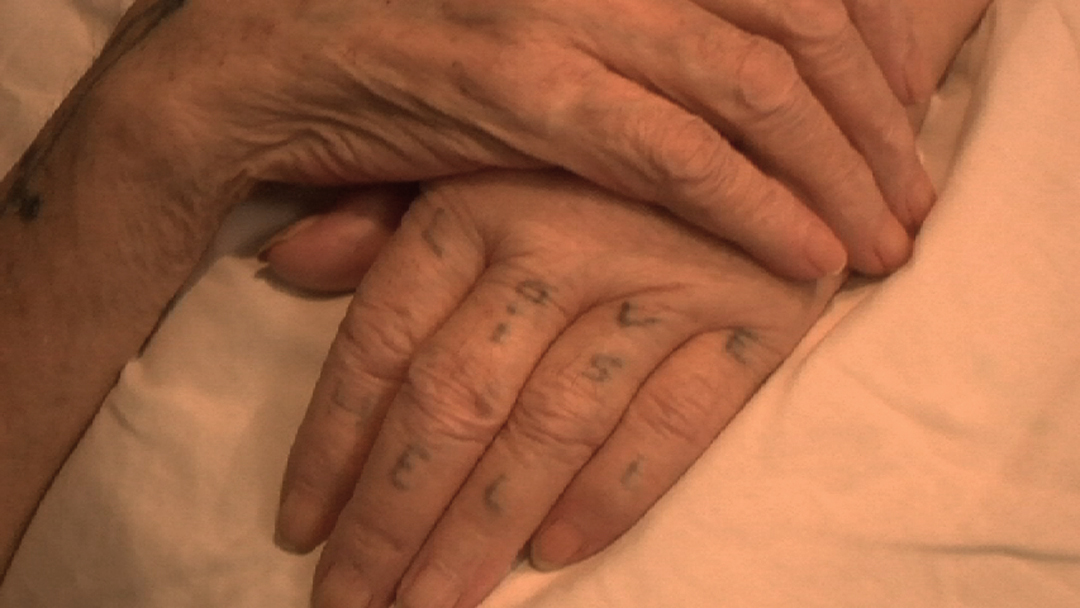
"No matter how tired I am or how much [the patient wants] to go to sleep, I’ll sit with them while they’re taking their last breaths," Fernando says. "The day-to-day operations there are difficult, but the reality is that we’re just extending our humanity to some of the most vulnerable citizens in our community." His story is a window into experiences that are otherwise hidden from public view. "People are coming from the outside world and want to learn more about [the program] because they're seeing these displays of humanity happening in such an inhumane place."
Humane is also broadening their reach with new partnerships. In Illinois, Humane will be working with Southern Illinois University of Medicine to develop hospice programming from the ground up for the Illinois Department of Corrections. Back home in California, Humane is championing housing and care options for terminally ill incarcerated patients who qualify for compassionate release. Patients lack places to go because they don’t have family or friends, or they may not be welcome due to their criminal background. To bridge the gap in care, Humane is working with The Francisco Homes, a transitional living community, and Guaranteed Hospice, a community-based hospice, to develop a pilot program in Los Angeles. Together, they hope to create a program that will set the gold standard for allowing people to be treated in community for end-of-life care.
It has been a year of opportunities and Humane continues to dive deep, learn more, and identify the best practices in their field. Five years down the road, they hope to become a center of excellence, bringing together a foundational body of knowledge that can be used to develop more programs in more states—while advancing their work rooted in California. For those suffering in bleak circumstances, Humane offers comfort and renewed hope.
_________
Photo credit: Photos are from the documentary film Prison Terminal. Courtesy of Edgar Barens.


