


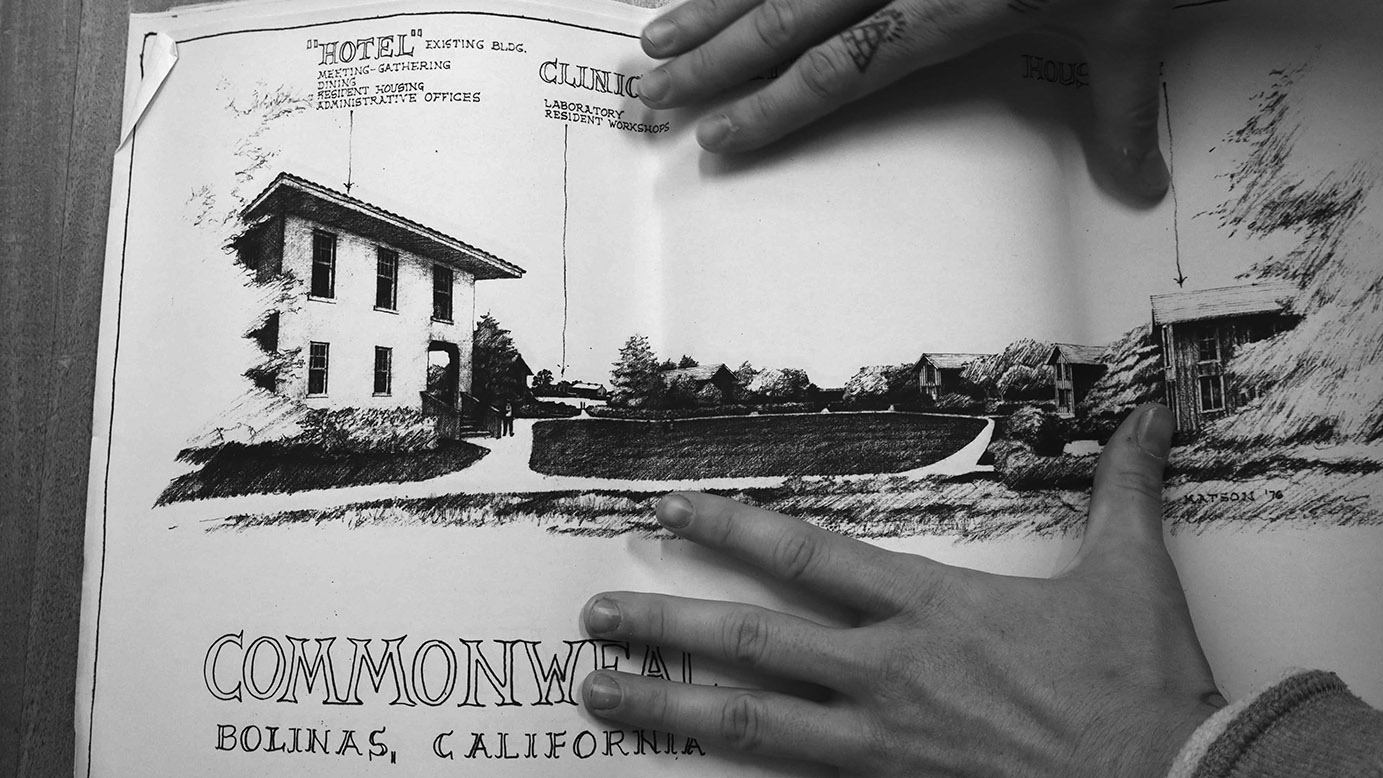
Discovering Our Future in the Archive: A 1977 Document Reveals Commonweal's Enduring Vision

January 13, 2026
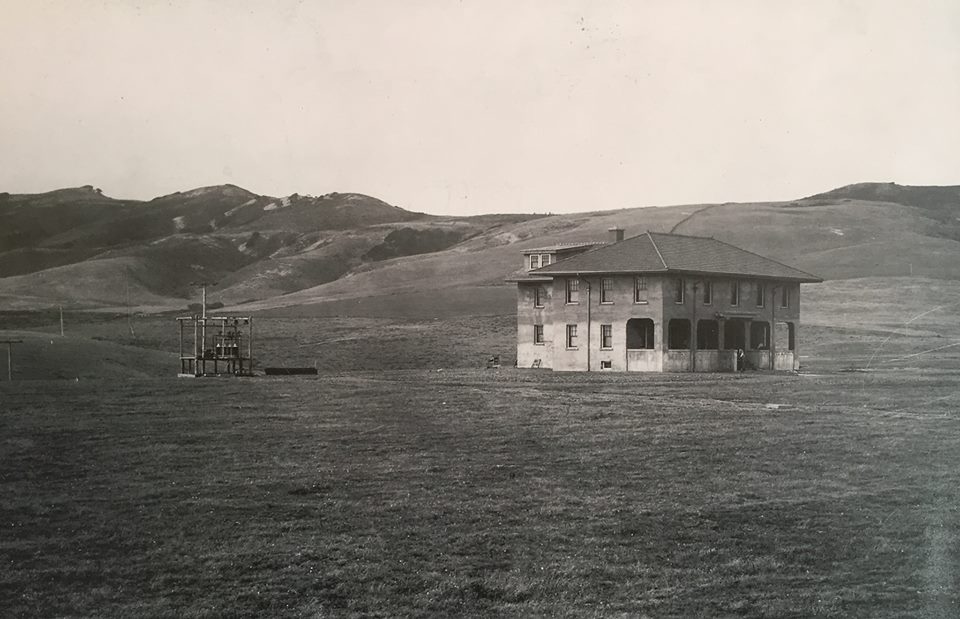
The room fell quiet as a three-page document was passed around the circle. We were gathered in Pacific House—the largest of the three retreat center buildings we've restored at our home within Point Reyes National Seashore—for our annual in-house staff retreat. Someone had just unearthed a founding document from our newly developing archive, and we were reading it for the first time.
"Service and Research in Human Ecology," the title read.
The opening paragraph was striking:
"For the past ten years there has been an explosion of awareness in this country that humankind has the potential of rendering the earth inhospitable to life and that, with this country in the lead, it is the road we have been traveling. But as our awareness of the trend toward degradation of the planet grows, it becomes increasingly reasonable to expect this country to take the lead in finding another path."
The words could have been written yesterday. They felt urgent, contemporary, and alive. The document continued with a vision that seemed to speak directly to our current moment:
"In the near future, practical people will begin to build communities that work in ecological harmony with their surroundings. They will develop technologies that nurture the biosphere instead of depleting it. They will rediscover cycles of work and rest that do not result in premature disablement and death from degenerative disorders. They will recognize that health is more than the absence of obvious disease."
Then came the date: 1977.
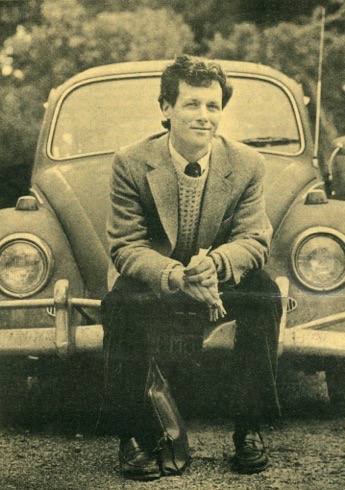
This was written when Commonweal was only a year old. Nearly 50 years ago, Commonweal founder Michael Lerner had articulated the precise work we're doing today—building community resilience, developing healing practices, connecting human and planetary health, creating technologies that serve rather than deplete. The prescience was moving. But more than that, it gave us a sense of trajectory. We're not inventing something new. We're continuing work that was set in motion generations ago, work that remains as vital now as it was then.
The Archive Project: From Obligation to Inspiration
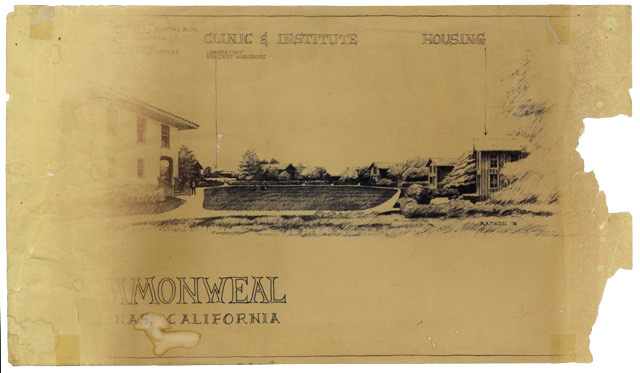
When we began our archive project in 2023—collecting and curating historical documents, publications, drawings, and other information from Commonweal’s history—we knew it was an administrative duty, something we owed to history. Michael, still actively engaged in this work he initiated, has been helping us identify and preserve key documents, images, videos, and material objects that tell Commonweal's story. We wanted future generations to have access to this foundational material, perhaps to accelerate their own change-making work.
The project quickly became a source of inspiration rather than obligation. Each discovery reveals layers of continuity and evolution. We see where we've been faithful to our founding vision and where we've adapted to changing times. We understand that at this 50-year mark, with our founder still vital and our programs networked globally, we're only in the midst of our work. The archive is being designed for dual purposes. It is open to scholars for research, and actively used by our Commonweal community for guidance and grounding. It is being designed to house texts, images, video, and material objects—a living collection that serves both historical preservation and present-day innovation.
Bringing Back the Printed Word
The archive has also sparked a revival of our publications work. We ran Common Knowledge Press for decades. Now we're relaunching our publications through The New School, Commonweal’s expanding learning community and podcast.
Six major publications are in development, many of them written by Michael Lerner, scheduled to launch over the next one to two years. These are not dusty historical documents—they are revealing themselves to be vital texts addressing the urgent questions of our time.
If you visit Commonweal, you'll see walls of books stacked everywhere. Yet somehow we manage this without being bookish. We never lose sight of the connection between head, heart, and hands. The printed word matters to us because it carries ideas that translate into practice. We believe that reflection leads to action, and wisdom is most alive when it becomes embodied in real work.
The Work Still to Be Done
The 1977 document concludes with words that could serve as our mission statement today:
"COMMONWEAL is without doubt a major piece of work. It is not a common thing to see such an enterprise born. For it to succeed, it must be well conceived and well administered. But above all it must meet a clear need in American life— the need for a multi-faceted center at which applied research on crucial questions of the inner and outer human ecology will be confronted. We believe that the time has come to meet that challenge."
Nearly five decades later, that challenge hasn't diminished. If anything, it's grown more urgent. Climate disruption, social fragmentation, health crises, and loss of community bonds aren't new problems, but their acceleration demands renewed commitment to the work that the Commonweal founders envisioned.
What the archive reveals is both humbling and energizing. We're part of something larger than any single generation. The work we're doing today builds on foundations laid before us and will support work we can't yet imagine. The documents we're discovering are seeds, carrying forward the DNA of an organization committed to healing ourselves and the earth.
***
The Commonweal Archive will be made accessible to scholars and researchers in 2026. Stay tuned as we reveal more throughout our 50th anniversary year.


