


Land as Sacred Stewardship

June 18, 2026
"There are no unsacred places; there are only sacred places and desecrated places."
—Wendell Berry
Dear Commonweal friends,
This area has fences everywhere. Around Commonweal, the fences keep the cows in their pastures. In our neighborhoods and communities, fences around homes, buildings, roads, and along property lines carry a message: privacy, separation, boundaries, ownership. The land doesn't end at the fence line or property boundary. Is land really a commodity? Are there other ways to relate to it? Isn't all land alive and sacred?
Land is core to our identity, our cultures, and our communities. For many communities that live close to the land, there is a knowing—an understanding that they are part of that land, not separate from it. Indigenous communities hold this wisdom. In a different way, people who live on farms, retreat centers, and in national parks experience this bond to the Earth. We experience this bond at Commonweal.
Retreat centers, like ours, are land-based communities. They steward lands in every state and around the world. They often hold knowledge and ways of being that deepen our connection to self, community, and earth. As we move further into a time of unknowing, these centers can be islands of coherence—like the monasteries of the Middle Ages, keepers of wisdom and practice during turbulent times. The Retreat Center Collaboration, a Commonweal program since 2018, brings these centers together, weaving a network of sacred land stewardship.
Dr. Anna O'Malley's Natura Institute for Ecology and Medicine here at Commonweal Garden is another pathway to deepen and heal in relationship with the more-than-human world. Imagine laying a blanket under a grove of redwoods. As Anna says: "We welcome engagement here, on the land. Your hands in this soil. Tending, building community, receiving the benefits of loving up the land, learning some regenerative tending practices in the process—it is a beautiful thing to cultivate relationship with place." Natura offers workshops, walks, meditations, and ways to engage directly with this land.
The Center for Ethical Land Transition is another way Commonweal explores our relationship to land. The program works at the intersection of the sacred and the practical—using tools within the system to move toward a fundamentally different relationship with land, one rooted in justice and healing.
Having a different relationship with land allows us to heal not only our connection to Earth but also ourselves. Knowing the stories of our land—both where we are and where we come from—builds our connection and deepens our communities. Stewarding the land is stewarding our resilience: not only in the physical sense (water, food, energy, nature) but also for human communities, our individual resilience, and the more-than-human world. In times of breakdown, communities rooted in place and land are the foundation for what emerges next. As we look into the times ahead, this is a vital part of our resilience and healing.
As we continue to mark our 50th anniversary, please save the dates for a special event on Art for Our Common Good (July 12), a community reading and celebration (October 3), and a special evening with Francis Weller (November 8). And as always, your support is what makes all this work possible.
With gratitude,
Oren Slozberg
Executive Director
Commonweal
___
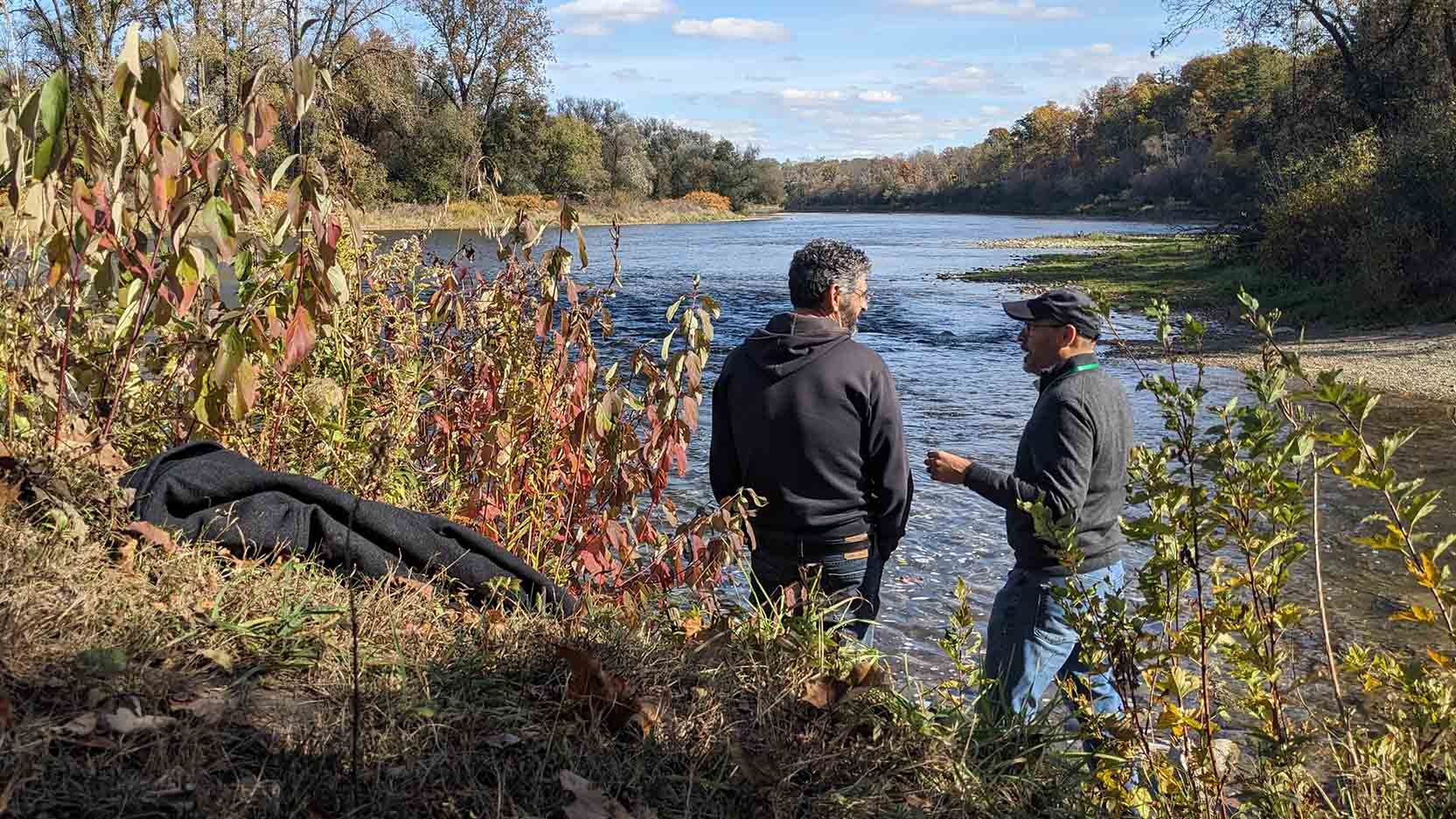
Photo: Oren Slozberg and Francisco Burgos, Director of Pendle Hill, attend a Retreat Center Collaboration gathering at Five Oaks Retreat Centre in Ontario, Canada. Credit: Ben Scott-Brandt


